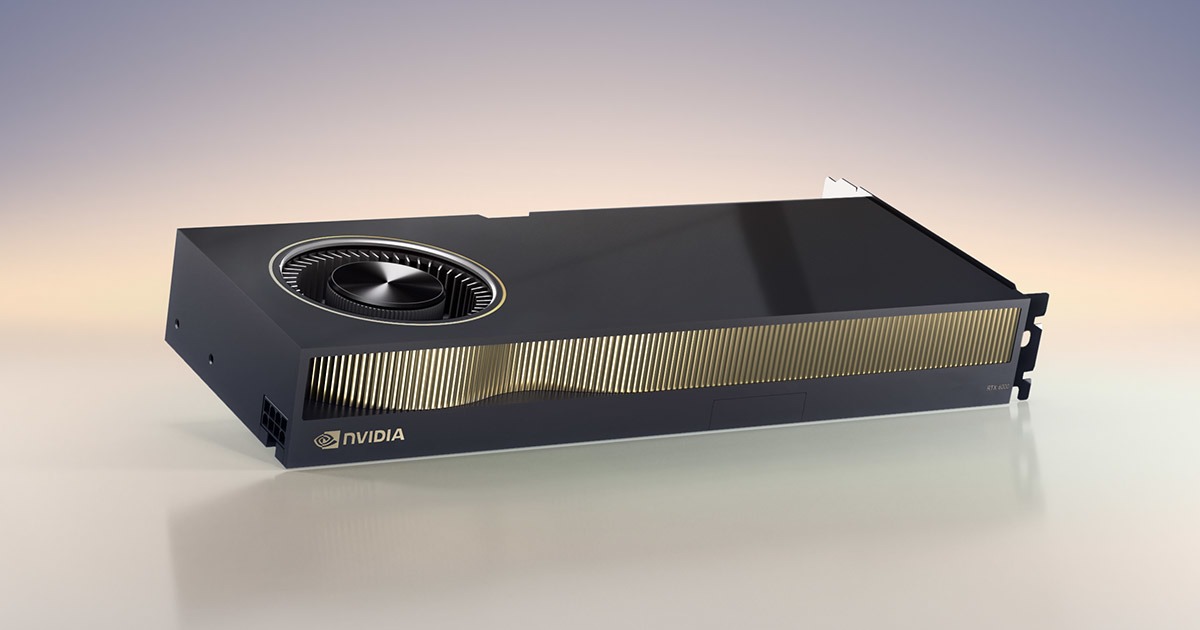
DESKTOP
NVIDIA RTX 6000 Ada Generation
The current-generation workstation flagship. Same 48 GB as the A6000 but newer silicon and faster memory bandwidth — the card a well-funded small team buys instead of building a server rack.
Specs, in plain English
- GPU memory 48 GB per GPU × 1 GPU = 48 GB total GPU memory is fast on-card RAM that has to hold a model's parameters plus working data while it runs. If a model is bigger than the GPU memory available, it simply will not load.
- Number of GPUs 1 How many GPUs work together as one system. More GPUs pool their memory into one bigger pool, which is how you fit models too large for a single card — but they need fast links between them to act as one machine.
- CPU Workstation CPU (Intel Xeon W / AMD Threadripper Pro) The CPU prepares and feeds data to the GPUs and runs the software around the model. For running big AI models it rarely limits which model you can run — the GPU memory does.
- System RAM 128 GB System RAM (separate from GPU memory) holds the operating system, the data pipeline, and anything staged before it reaches the GPU. More headroom here means fewer slowdowns under load.
- Power draw 300 W Power draw is how much electricity the machine pulls when running flat out. It determines your electric bill, and how much cooling and electrical wiring the room needs.
- Price $6,800 The purchase price of the hardware itself — it does not include electricity, cooling, networking, or setup labor.
What this means in everyday terms
This machine draws 300 watts — about like 0.2 homes running continuously. Left on 24/7 it uses about 7 kWh a day, which is roughly 0.1 electric-car batteries worth of energy every day.
Homes = watts ÷ 1,200. Daily energy (kWh) = watts × 24 ÷ 1,000. EV batteries/day = daily kWh ÷ 90.